

In materials testing, accuracy in strain measurement is essential. Compared to traditional contact systems, the optical extensometer - especially in its video extensometer version - has established itself as an advanced, non-contact and highly accurate solution.
This technology is transforming the way universities, laboratories and R&D centers obtain data in their mechanical testing.
If you want to learn more about this type of non-contact strain gauges, you can read our article dedicated to the videoextensometerwhere we explain in detail how it works and why it is revolutionizing the industry.
What is an optical extensometer and how does it differ from a contact extensometer?
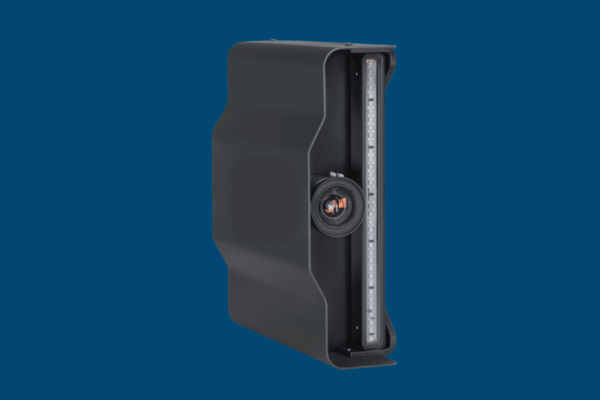
The optical extensometer is a non-contact measuring device that uses high-resolution digital cameras and image processing algorithms to detect length variations in a sample during a test.
The best known variant is the video extensometer, which captures real-time images of the marked specimen, accurately detecting changes in position between reference points.
Unlike the contact extensometer, this system:
- It does not alter the behavior of the material.
- Avoids mechanical interference.
- Reduces wear and tear.
In addition, it is ideal for delicate materials, soft tissues or parts with complex geometry where direct contact is not feasible.
Advantages of the optical extensometer in demanding test environments
Non-contact measurement
The optical extensometer avoids any physical interaction with the sample, which guarantees a measurement more faithful to the real behavior of the material, especially in composite materials or biomaterials.
2. High resolution and accuracy
With sub-micrometer resolutions, these devices offer far superior accuracy to conventional systems, making them indispensable in critical applications.
3. Wide range of applications
From tensile and compression to cyclic, thermal or fatigue testing, the video extensometer adapts easily. It can even be used in climatic chambers or environments with extreme conditions.
4. Digital integration and traceability
Optical systems are integrated with data acquisition platforms to facilitate analysis and reporting. Servosis optical extensometers are designed to work in sync with our testing machines, providing full traceability.
Under the ISO 9513 standardwhich regulates the calibration of extensometers used in materials testing.
5. Measuring to breakage and maximum equipment protection
Unlike manual systems, the optical extensometer allows recording the strain up to the exact moment of breakage, without risk to the equipment. Since it is not in contact with the sample, the system is not damaged by vibrations or sudden shocks. In addition, the video extensometer can focus precisely on the area of the material that is actually being stretched, allowing a more representative and accurate measurement to be obtained.
Imetrum and X-Sight Official Distributors in Europe
At Servosis we work with two international leaders in optical extensometry technology:
- Imetrum: British manufacturer specializing in video strain measurement systems with Video Gauge™ technology.
- X-SightEuropean benchmark in non-contact extensometry, ideal for demanding tests in industrial and academic environments.
Both systems are integrated and validated by our technical team, which allows us to adapt each solution to the customer's needs.
Optical extensometer in universities and R&D centers
The implementation of this technology is growing in academic institutions and technology centers. In the Home | University of LeónFor example, the use of Servosis video extensometers allows advanced research in the field of materials engineering to be carried out with previously unthinkable precision and stability.
Thanks to the optical extensometer, complex mechanical behavior can be studied, simulation models can be validated and new materials can be developed with guaranteed reliability.
Key factors for choosing the right optical strain gauge
When acquiring a system of this type, it is essential to take into account:
Capture speed and resolution
Depending on the type of test (static or dynamic), a system with high-resolution cameras and adjustable speed (up to 100 fps or more) should be chosen.
Analysis software
Intuitive yet powerful software is essential. The optical strain gauge must have an interface that allows easy configuration, measurement, graphing and exporting of results.
Compatibility with existing equipment
Servosis guarantees the integration of its optical extensometers with new or existing equipment, adapting the system to the particularities of each laboratory.
Accuracy and reliability in every measurement
The incorporation of the optical extensometer marks a turning point in the way mechanical testing is approached. Its precision, versatility and adaptability make it an essential tool in sectors where data reliability is critical.
At Servosis, we design customized solutions in optical extensometry, advising each customer according to their technical needs, type of sample and applicable regulations. Whether in the university, industrial or research environment, our commitment is to guarantee reliable, durable and future-proof results.
Are you interested in integrating an optical strain gauge in your laboratory or research center?
Talk to our specialists and receive a customized proposal.