


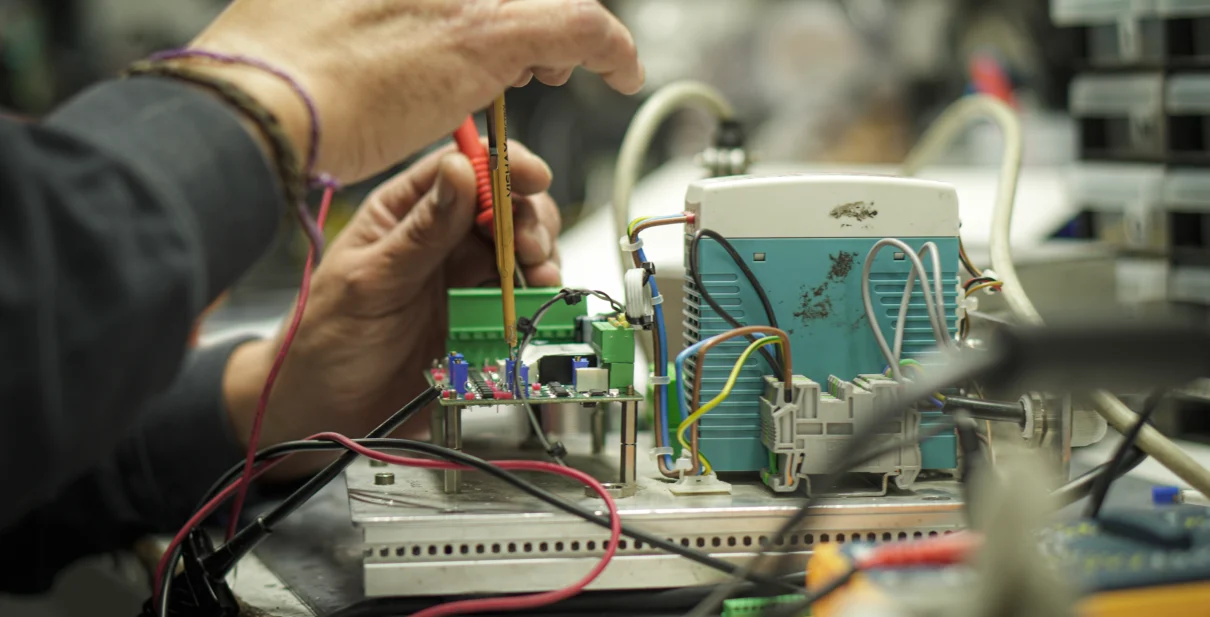
Why can modernizing a testing machine be a strategic decision?
Throughout the life cycle of a test machineWhen new technical requirements, stricter regulations or automation needs arise that older systems can no longer effectively meet, it is not uncommon for new equipment to be replaced. However, replacing equipment with new equipment is not always the only option.
At Servosis we know that modernizing a testing machine -when its structure and mechanics allow it- can mean a significant technical improvement, with an optimized investment and less environmental impact. We are talking about a deep intervention that updates the control system, sensors, software and electronics, adapting it to current standards.
Real benefits of upgrading your equipment
Improved accuracy and repeatability
Advances in electronics and data acquisition are leading to more reliable and accurate measurements. By upgrading a testing machine, analog systems can be replaced by high-resolution digital solutions, improving test consistency and reducing the margin of error.
2. Digitization of the control system
One of the most relevant changes is the incorporation of a new modern digital control systemwith intuitive and configurable user interface. This allows to program tests, visualize curves in real time, generate automatic reports and store results with full traceability.
3. Alignment with new regulations
Regulations in sectors such as automotive, aeronautics or energy are constantly being updated. An old machine may no longer meet certain requirements if it is not adapted. With a modernization, it is possible to ensure that the equipment is aligned with ISO, ASTM or other industry specifications.
4. Savings versus the purchase of new equipment.
Reusing the structural base, load-bearing frames and mechanical components in good condition can drastically reduce the total acquisition cost. Modernization becomes a profitable investment, especially when the mechanics remain robust and functional.
5. Reduction of downtime
An older machine, with obsolete components, may suffer more incidents or require frequent maintenance. By upgrading critical elements such as the control system, sensors or hydraulics, test stability is improved and unplanned downtime is reduced.
What can be modernized?
Depending on the model and condition of the equipment, the following areas are usually subject to upgrade:
● Data acquisition system
The original electronics are replaced by current systems with higher precision, more channels, higher sampling rate and digital connection.
● Control software
The control software developed by Servosis allows running tests from a modern environment, compatible with current operating systems and adaptable to different test protocols.
● Sensors and load cells
Upgrading the load cell ensures a more accurate and safer measurement. It is also common to incorporate additional sensors, such as digital strain gauges or temperature sensors.
● Electrical panel and control system
The old switchboard is replaced by a modern solution that allows full control integration, updated protections and communication with other systems.
● Hydraulics or actuators
In the case of servo-hydraulic machines, the hydraulic unit can be renewed, proportional valves can be upgraded and more efficient pressure control can be ensured.
● Safety
Current safety elements are implemented: physical barriers, emergency stops, anti-collision protection and luminous signaling, in compliance with current risk prevention regulations.
How do you know if your machine is a candidate for modernization?
At Servosis, we always technically evaluate each case before making a proposal. A machine may be a candidate for modernization if:
- It has a mechanical structure in good condition
- Your control system has become obsolete or is no longer repairable
- Requires more precision, speed or functionality
- Electronics or software do not allow comply with current regulations
- It is desired to digitizing test processes or integrate them into connected industrial environments
What process do we follow at Servosis?
Our methodology is 100% adapted to each client and is structured in phases:
1. Customized technical analysis
We review the actual condition of the equipment, collect customer specifications and evaluate the available options. This analysis can be done in the field or remotely, depending on the type of machine.
2. Technical and economic proposal
We present a detailed proposal with suggested improvements, components to be replaced, software to be installed and estimated timelines.
3. Development and installation
Our technical team is in charge of disassembling, installing and calibrating the new elements. All components used are of high quality and compatible with industrial standards.
4. Start-up, training and support
Once modernized, the machine is fully validated. We train the customer's technical staff and offer continuous support in case of any incident.
Modernization is also a sustainable decision
In addition to economic savings, modernization helps reduce industrial waste and emissions from transporting and manufacturing new equipment. By giving new life to an existing machine, companies are contributing to a more sustainable and responsible production with the environment.
Do you want to know if your machine can be retrofitted?
At Servosis, we do not make generic recommendations. We study each case with technical rigor and give you a clear vision of whether modernization is viable and what benefits you can obtain.
Contact us at without obligation and let us help you improve your test system without starting from scratch.